
TUSI services | Brand
Brand architecture for holding groups and multi-business organizations
Brand architecture is the structure that defines how a parent brand relates to its companies, products and services. TUSI has designed the brand architecture and portfolio of holding groups such as Tadbir Economic Development Group, which has around 100 subsidiary companies.

Every holding group has a brand architecture, by design or by accident
Brand architecture decides how the parent brand and its subsidiary brands relate: where the group name stands behind a company, where a company should be seen on its own, and by what rule a new brand joins the family.
TUSI has designed brand architecture for holding groups active in fields as varied as energy, telecommunications, pharmaceuticals and industry. The result is an order that passes the group’s credibility on to its companies and leaves room for future growth.
Relationships
Define how the parent brand relates to its companies and products.
Simplicity
Reduce complexity for audiences and cost for the organization.
The future
A structure that holds up through growth, mergers and acquisitions.
What we do
Portfolio audit
A list and assessment of every brand, name and logo in the group, and the role each plays in the business.
Architecture model
Choosing how the parent and subsidiaries relate: monolithic, endorsed, independent or hybrid.
Naming rules
Guidelines for naming new companies, products and services, so the brand family stays coherent.
Presentation rules
How the group logo and company logos appear together on stationery, signage, websites and reports.
Decision tree for future brands
Criteria that decide where a new brand sits in the architecture.
Transition plan
The order and timing of changes, at the lowest cost and with the least damage to existing brand equity.
“The cost of making everything look the same is never recorded in any financial statement.”
When you need this
Subsidiaries look unrelated
People don’t know the companies belong to one group, and the group’s credibility doesn’t reach them.
A merger or acquisition
You need to decide whether the new company keeps its name and identity, joins the parent brand or combines the two.
Forming a parent holding
Scattered businesses are coming together under one umbrella, and that umbrella needs a clear name and position.
Too many products and services
The portfolio has grown so large that customers get lost among names and sub-brands.
Entering international markets
You need to decide which brand goes abroad, and how it relates to the group.
How we work
Audit
Collect and review every brand in the group, interview company leaders and understand the audiences of each business.
Analyze
Assess the value and role of each brand, the overlaps, and the opportunities to transfer credibility from the group to its companies.
Model
Design architecture options and work through the consequences of each in a workshop with the group’s leadership.
Codify
Write the naming and presentation rules and a transition plan for the subsidiaries.
Selected work

Tadbir Economic Development Group
Brand renewal for a holding group with around 100 subsidiaries in energy, telecoms, pharmaceuticals and industry, with a focus on brand architecture and portfolio.
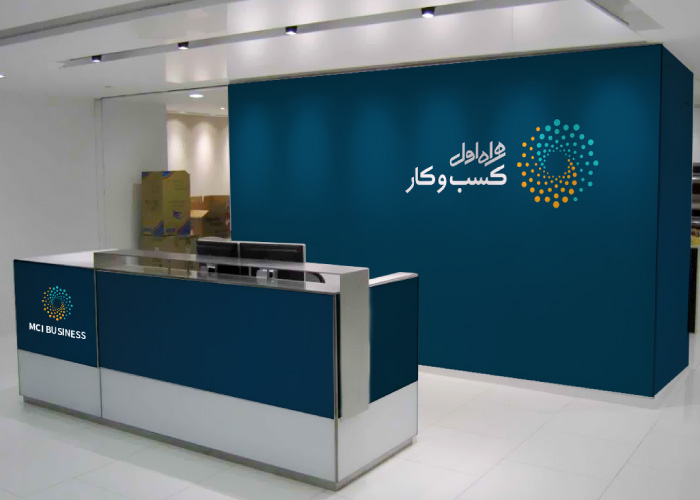
MCI Business
The brand for MCI’s enterprise services unit: from scattered execution to one orderly whole.

Espod Investment Holding
Naming and brand design for a parent holding with domestic and international businesses, after field research and discovery sessions.
Frequently asked questions
What is brand architecture?
Brand architecture is the structure that defines how a parent brand relates to its subsidiary brands, products and services, what role each brand plays and how it is presented.
What are the main types of brand architecture?
There are four common models: a branded house, where every business sits under one name; a house of brands, where each business has its own name; endorsed brands, where the parent stands behind a sub-brand; and hybrid models that combine them.
Should every company carry the group name?
Not necessarily. Sometimes the group’s credibility is a company’s greatest asset; sometimes a company has a stronger independent name in its own market. Brand architecture makes that decision for each company, based on evidence.
How does brand architecture relate to visual identity?
Brand architecture decides how logos sit together. The visual identity is then designed or unified according to those rules. Architecture first, design second.
How long does it take to implement a new architecture?
It depends on the number of companies and touchpoints. Implementation is usually phased, and the transition plan sets the order according to priority and budget.
Does this apply to public-sector organizations?
Yes. Organizations with many departments, units and programs face the same question: how can every part speak with one voice?
How are fees for brand architecture set?
Fees are set after the discovery meeting and confirmed in the proposal. They depend on the number of companies and brands in the group, the range of business sectors, the depth of the portfolio audit, and whether presentation guidelines and a transition plan are in scope.
Why TUSI for brand architecture?
Three reasons. We designed the brand architecture and renewal of the Tadbir holding group, with around 100 subsidiaries. We have designed subsidiary brands alongside their parent, such as MCI Business. And one team can deliver the strategy, naming and visual identity for every brand in the group at once.
Related services
How coherent is your organization’s family of brands?
In an introductory meeting, we review your organization’s brand together and map out a recommended path.