
At a glance
- Branding is the managed process of shaping how audiences perceive an organization; a logo is only one of its outputs.
- Corporate branding builds the brand of the whole organization for all of its stakeholders: customers, shareholders, employees, partners and regulators.
- The core components are the brand platform, positioning, brand architecture, name, visual identity, experience and communications.
- Professional delivery follows seven stages: audit, research, strategy, architecture, identity, experience and communications, and rollout.
- Success is measured through awareness, perception, preference, consistency of execution and talent attraction.
What is branding?
Branding is the deliberate, managed process that decides how an organization, product or service is known by its audiences, what promise it is known for and why it should be chosen. A brand ultimately lives in people’s minds; branding is the effort to make sure that perception does not form by accident.
Branding starts with a strategic decision (who are we, and why us?) and continues at every point of contact with the organization: from the name and logo to how employees behave, how the service feels and what campaigns say.
Brand, branding and visual identity: the difference
The three terms are often used interchangeably, but they describe three different layers:
| Concept | Short definition | The question it answers |
|---|---|---|
| Brand | The perception audiences hold of the organization | How do others know us? |
| Branding | The managed process of shaping that perception | How do we want to be known, and what do we do to get there? |
| Visual identity | The system of visual signs: logo, color, typography, imagery | How does the brand look? |
That is why designing a logo without a brand strategy is not branding; it is only part of the visual identity. See visual identity design.
How is corporate branding different from product branding?
Product branding usually targets one group of customers in one market. Corporate branding builds the brand of the whole organization, and its audiences are far more varied:
- Customers and business partners, who need to trust the organization’s capability and stability;
- Shareholders and investors, who look for transparency and direction;
- Employees and job applicants, who want to know what they are working for;
- Regulators, media and society, who judge legitimacy and social responsibility.
In large organizations and holding groups, corporate branding must also define how the parent brand relates to its companies and products. This is the work of brand architecture.
Why branding matters for large organizations
For a large organization, the brand is a strategic asset, not an advertising topic. Good branding has concrete effects:
- Faster trust: when the name stands for something clear, customers, partners and investors decide more easily.
- Group coherence: in holding groups, a shared brand passes the group’s credibility to its companies.
- Talent: a brand with a clear purpose and values attracts and keeps skilled people.
- Pricing power: a distinctive brand is less exposed to price competition.
- Resilience: an organization with accumulated credibility suffers less in media and market crises.
- Efficient communications: when every unit speaks with one voice and identity, each campaign and event works harder.
The components of a corporate brand
| Component | What it defines | Related service |
|---|---|---|
| Brand platform | Purpose, mission, vision, values and brand promise | Brand strategy |
| Positioning | Core audience, competitive frame and reason to choose | Brand strategy |
| Personality and tone | How the brand speaks and behaves | Brand strategy |
| Brand architecture | How the parent brand relates to sub-brands | Brand architecture |
| Name | Names of the organization, companies and products | Naming |
| Visual identity | Logo, color, typography, imagery and brand book | Visual identity |
| Brand experience | Customer and employee experience at touchpoints | Customer experience |
| Communications | Messages, campaigns and brand narrative | Brand campaigns |
The seven stages of a corporate branding project
1. Audit and discovery
Understanding the current state: existing brands, logos, messages and touchpoints, and conversations with leadership about business strategy. The output is a clear definition of the problem and the project scope.
2. Research and insight
Understanding audiences, competitors and current perceptions through stakeholder interviews, qualitative and quantitative research and competitor analysis, to find real opportunities for differentiation. See customer research.
3. Brand strategy
Defining the brand platform, positioning, personality and message architecture, usually in joint workshops with the leadership team. Every later stage rests on this one.
4. Brand architecture
For multi-business organizations: deciding how the parent brand relates to companies and products, with rules for naming and display. See our guide to brand architecture for holding companies.
5. Name and visual identity
Naming where needed, then the logo, visual system and brand book, built on the strategy.
6. Experience and communications
Translating the brand into customer and employee experience, and designing the messages and launch campaigns.
7. Rollout and brand governance
A transition plan, employee training, guidelines for suppliers and a clear owner for the brand. Many projects fail here: the brand is designed but never lives inside the organization. See brand management systems.
Who in the organization should be involved?
Corporate branding is a leadership decision; it cannot be delegated to public relations or marketing alone:
- The CEO or board: final decisions on positioning, architecture and name.
- Marketing and communications leaders: executive owners of the brand and project coordinators.
- Human resources: employer brand and embedding the brand in the culture.
- Business unit and subsidiary leaders: making sure the brand matches business reality.
Common mistakes
- Starting with the logo, before positioning and message are clear; it usually leads to another redesign.
- Taste instead of criteria: decisions based on executives’ personal preferences rather than strategy.
- Ignoring architecture: adding companies and names without rules until the group becomes dozens of scattered brands.
- Branding only for the outside: employees are the last to hear about the new brand, although they are the first point of contact.
- No brand book and no owner: the identity drifts as units and suppliers apply it their own way.
- Changing too much: discarding assets that took years to build, without an audit.
- Expecting instant results: brands are built over time, through consistent repetition.
How to measure branding success
| Area | Example indicators |
|---|---|
| Awareness | Unaided and aided awareness of the name among target audiences |
| Perception | Brand associations and how closely they match the intended position |
| Preference | Willingness to choose, recommend or partner with the organization |
| Consistency | Share of touchpoints executed according to brand guidelines |
| Employer brand | Quality and number of applicants, and employee retention |
| Business | Win rate in tenders and contracts, and pricing power |
Corporate branding in Iran: some considerations
- Diverse stakeholders: many large Iranian organizations deal at the same time with customers, regulators and public shareholders; the brand must be credible to all of them.
- Multi-sector holdings: holding structures with varied companies make brand architecture a necessity.
- Cultural roots, global language: the brand should be rooted in Iranian culture and still legible to international partners, including in the Latin version of the name and logo.
- Leadership cycles: a change of management should not mean a change of brand; documentation and governance keep the brand stable.
Examples from TUSI’s work
- Tadbir Economic Development Group: brand renewal for a holding with around 100 subsidiaries, with a focus on brand architecture and portfolio.
- MCI Business: the brand for MCI’s enterprise services unit alongside the parent brand.
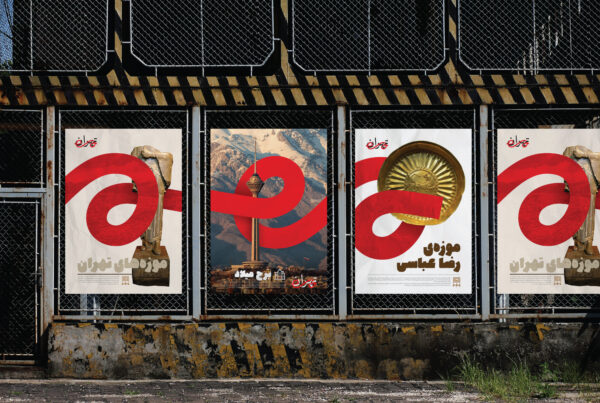
- Tehran city brand identity: branding one of the most complex “organizations” of all, a city.
Frequently asked questions about corporate branding
What is corporate branding?
Corporate branding is the process of building and managing the brand of a whole organization for all of its stakeholders, from customers and shareholders to employees and regulators. It covers strategy and positioning, brand architecture, name, visual identity, experience and communications.
What is the difference between a brand and branding?
The brand is the perception audiences hold of the organization; branding is the managed process that shapes that perception.
What are the stages of corporate branding?
Usually seven: audit and discovery, research and insight, brand strategy, brand architecture, name and visual identity, experience and communications, and rollout and governance.
Is logo design the same as branding?
No. A logo is part of the visual identity, and the visual identity is one output of branding. Branding starts with strategy and continues all the way to customer experience and employee behavior.
How long does corporate branding take?
It depends on the scale of the organization, the number of sub-brands and the depth of research. Strategy and identity usually take several months, and rollout across touchpoints happens in phases.
Talk to TUSI about your organization’s brand. TUSI Brand Agency has worked with Iran’s largest organizations, holdings and public institutions since 2013. Request an introductory meeting · TUSI branding services